
How Does Overtime Pay Work? Time-and-a-Half Explained
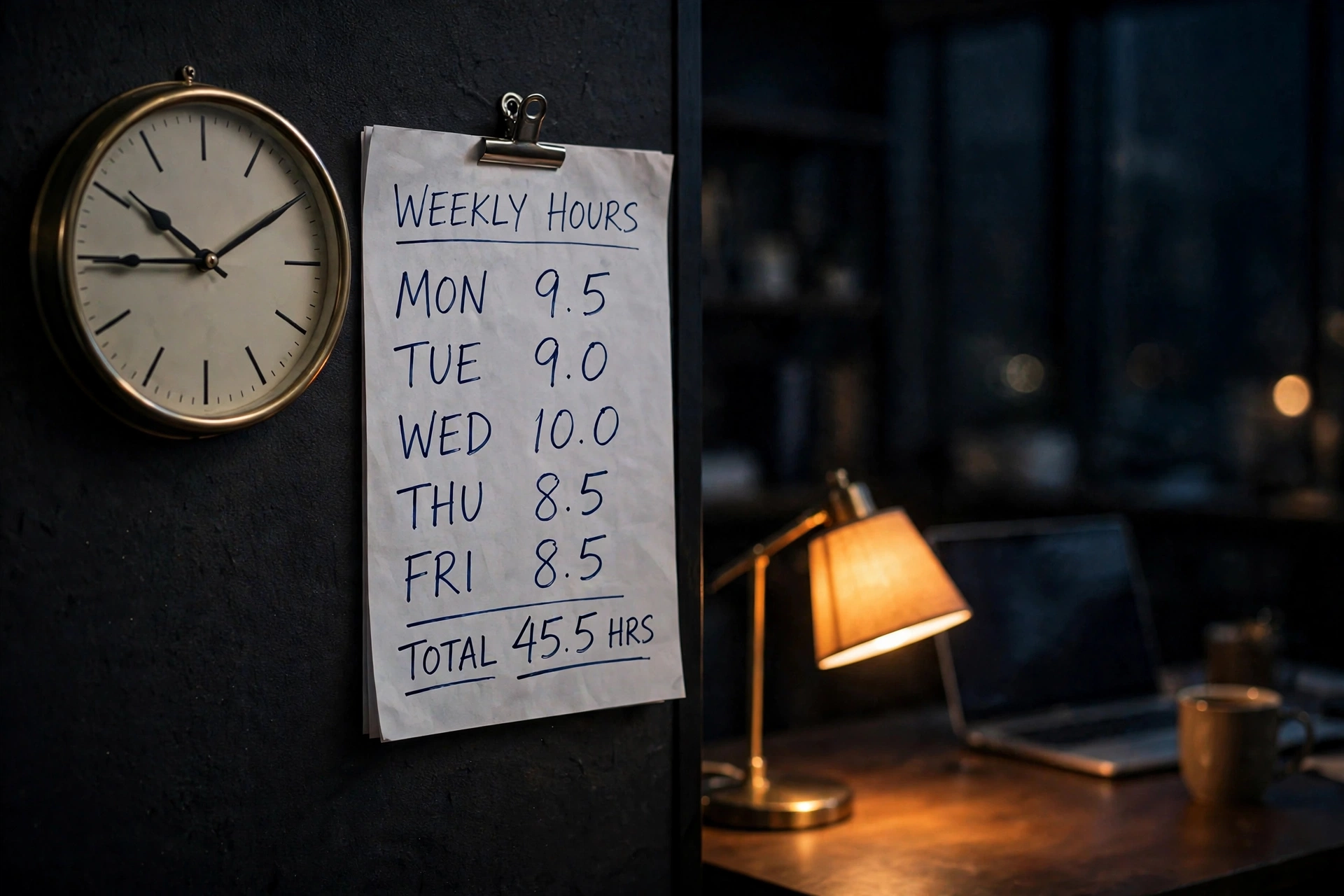
Overtime pay means you earn 1.5 times your regular hourly rate — "time and a half" — for hours worked beyond 40 in a single workweek. This is a federal requirement under the Fair Labor Standards Act (FLSA) for non-exempt employees. So if your regular rate is $20 per hour, every overtime hour pays $30.
Overtime pay means you earn 1.5 times your regular hourly rate — "time and a half" — for hours worked beyond 40 in a single workweek. This is a federal requirement under the Fair Labor Standards Act (FLSA) for non-exempt employees. So if your regular rate is $20 per hour, every overtime hour pays $30. Here's the full breakdown.
⚡ Key Takeaways
- Federal law requires 1.5x the regular rate for non-exempt employees working more than 40 hours in a workweek.
- The 40-hour threshold is per workweek — daily hours alone don't trigger federal overtime.
- Salaried workers can still earn overtime if they are classified as non-exempt.
- Some states, like California, add daily overtime rules on top of the federal standard.
- Your "regular rate" includes most extra payments, not just your base hourly wage.
What Is the Federal Overtime Rule?
The FLSA sets the national floor for overtime: any non-exempt employee who works more than 40 hours in a single workweek must be paid at least one and one-half times their regular rate for those extra hours.
A few points people often get wrong:
- It's weekly, not daily. Working 10 hours on Monday doesn't create federal overtime by itself. What matters is the total for the workweek crossing 40.
- It's hours actually worked. Paid vacation days, holidays, and sick leave generally don't count toward the 40 — only hours you really worked.
- The workweek is fixed. Your employer defines a 7-day workweek, and hours can't be averaged across two weeks to dodge overtime.
Who Qualifies for Overtime: Exempt vs. Non-Exempt?
"Non-exempt" means not exempt from the FLSA's overtime rules. Most hourly workers are non-exempt and therefore entitled to overtime.
"Exempt" employees — typically certain salaried executives, administrators, professionals, and outside salespeople who meet specific duty and salary tests — are not entitled to federal overtime. The key point: being paid a salary alone does not make you exempt. A salaried worker whose duties don't meet the exemption tests is still non-exempt and still earns overtime.
How Do I Calculate Overtime Pay?
The formula is simple once you know your regular rate:
- Find your regular hourly rate. For hourly workers, that's your stated wage. For salaried non-exempt workers, divide your annual salary by 2,080 (40 hours × 52 weeks).
- Multiply by 1.5 to get the overtime rate.
- Multiply the overtime rate by the number of hours worked beyond 40.
- Add your regular 40-hour pay.
How Do You Calculate Overtime for Hourly Workers?
At $20 per hour working 45 hours in a week:
- Regular pay: 40 × $20.00 = $800.00
- Overtime rate: $20.00 × 1.5 = $30.00
- Overtime pay: 5 × $30.00 = $150.00
- Total weekly pay: $950.00
How Does Overtime Work for Salaried Non-Exempt Workers?
A non-exempt employee earning a $52,000 salary works 44 hours in a week:
- Regular hourly rate: $52,000 ÷ 2,080 = $25.00
- Weekly salary: $52,000 ÷ 52 = $1,000.00
- Overtime rate: $25.00 × 1.5 = $37.50
- Overtime pay: 4 × $37.50 = $150.00
- Total weekly pay: $1,150.00
Do State Overtime Rules Add More Protections?
Federal law is the minimum — states can require more generous overtime. California is the best-known example: it requires daily overtime at 1.5x after 8 hours in a single day, and double time (2x) after 12 hours in a day, in addition to the weekly 40-hour rule.
If you work in a state with daily overtime, check your state's labor department rules. When state and federal rules differ, the rule most favorable to the employee applies.
What Counts in the "Regular Rate"
Your regular rate isn't always just your base wage. The FLSA generally includes non-discretionary bonuses, shift differentials, and similar payments in the regular rate before multiplying by 1.5. Purely discretionary bonuses and gifts can be excluded. This is one reason actual overtime checks sometimes come out slightly higher than a simple 1.5 × base wage calculation. For example, a non-discretionary monthly bonus spread across the month raises the regular rate used in that month's overtime math.
Let's put it all together for an hourly worker earning $20/hour who works 45 hours in one workweek.
1. Regular pay for the first 40 hours: 40 × $20.00 = $800.00
2. Overtime hourly rate: $20.00 × 1.5 = $30.00
3. Overtime pay for 5 extra hours: 5 × $30.00 = $150.00
4. Total gross pay for the week: $800.00 + $150.00 = $950.00
Those 5 overtime hours added $150 instead of the $100 they would have paid at the straight rate — a $50 premium for the week. And remember: overtime earnings are taxed like regular wages, so see how to calculate take-home pay to find out what actually lands in your bank account.
Frequently Asked Questions
Does my employer have to pay overtime for weekend work?
Not specifically. Federal law doesn't require premium pay just because hours fall on a weekend or holiday. Overtime is triggered by exceeding 40 hours in the workweek, regardless of which days those hours fall on.
Am I entitled to overtime if I'm paid a salary?
Maybe. Salary alone doesn't decide it — your exemption status does. If you're classified as non-exempt, you earn overtime on hours over 40 even though you're salaried. If you're properly classified as exempt, you generally don't.
Is double time required by federal law?
No. Federal law requires time and a half (1.5x) and nothing more. Double time exists only where a state requires it — California, for example, mandates 2x pay after 12 hours in a day.
How is the regular rate figured for a salaried non-exempt worker?
Divide the annual salary by 2,080 (40 hours times 52 weeks). A $52,000 salary gives a $25.00 regular rate, so the overtime rate is $37.50 per hour.
Do vacation or sick days count toward the 40 hours?
Generally no. The FLSA counts hours actually worked. If you work 32 hours and take 8 hours of paid vacation in the same week, that's 32 hours toward the overtime threshold, not 40.
Try It Yourself
Figure out exactly what your extra hours are worth with our free Overtime Pay Calculator — enter your rate and hours to see your overtime premium instantly.